Dark Oxygen: Malum Prohibitum
Exhibited:
2025, solo exhibition, Osmo/Za gallery, Ljubljana, Slovenia
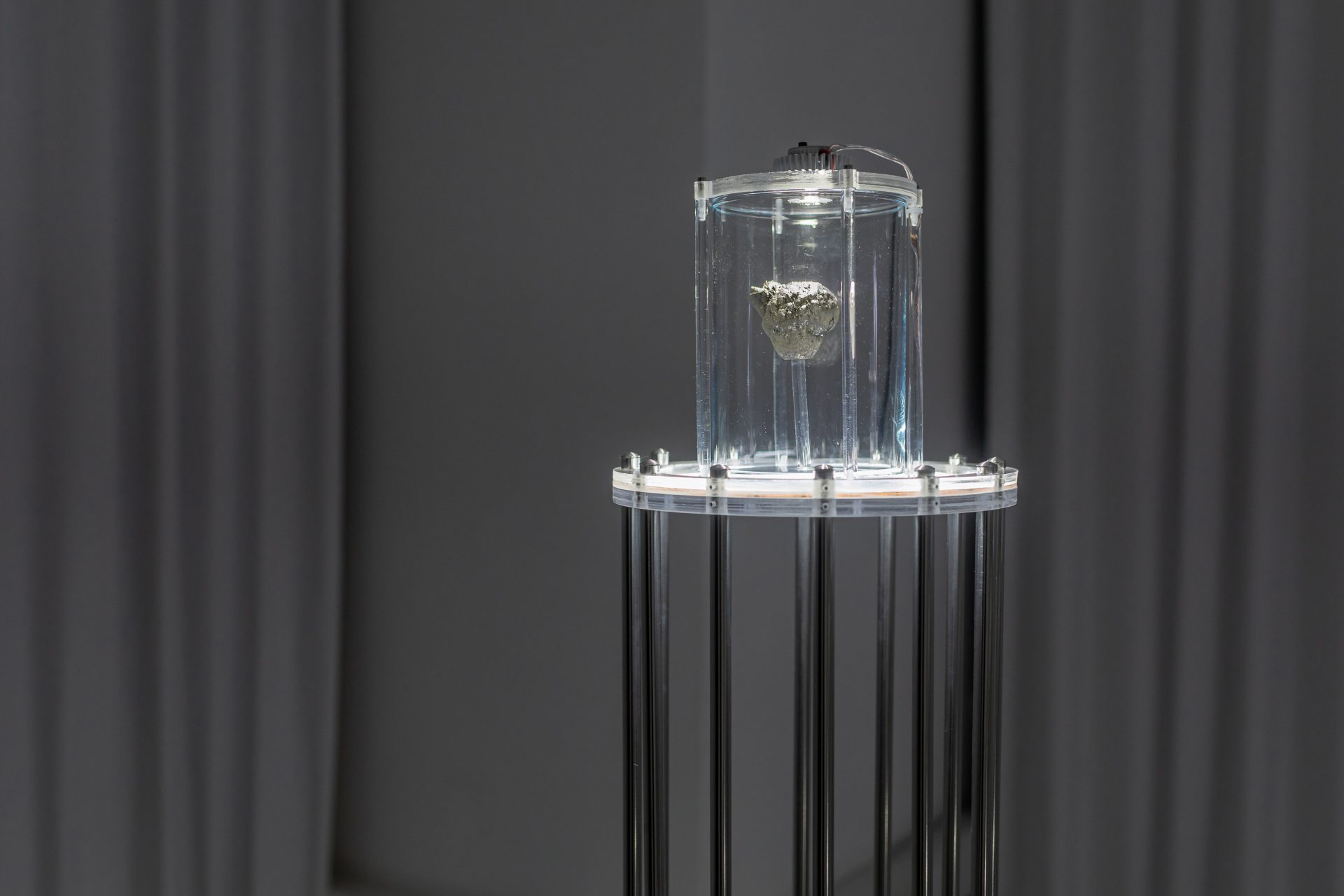
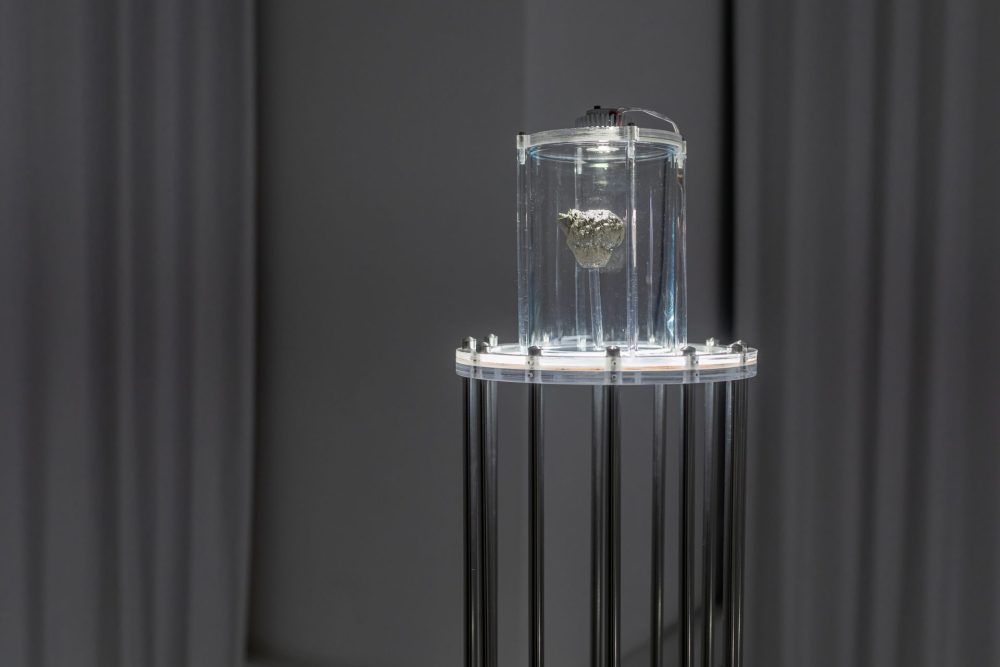
The installation Dark Oxygen: Malum Prohibitum investigates obscure processes within deep-sea ecosystems. The project is grounded in a breakthrough discovery published in 2024 in Nature (Nat. Geosci. 17, 2024)*, which identifies the phenomenon of so-called dark oxygen in the Clarion–Clipperton Zone, approximately 4,000 metres below sea level. This hypothesis, which remains the subject of ongoing scientific debate, attributes oxygen production to polymetallic nodules, natural concretions composed of manganese oxides, iron, cobalt, nickel, and other metals. In these depths, where light never penetrates, scientists propose that polymetallic nodules function as geobatteries, creating conditions for oxygen generation without photosynthesis, through electrochemical processes.
Polymetallic nodules are mineral concretions that grow over millions of years on the deep-sea floor and contain key metals essential for batteries, electronics, and the green transition. For this reason, they are considered among the most sought-after and, at the same time, most controversial raw materials of the future. Their total estimated value on the ocean floor is approximately 16 trillion US dollars.
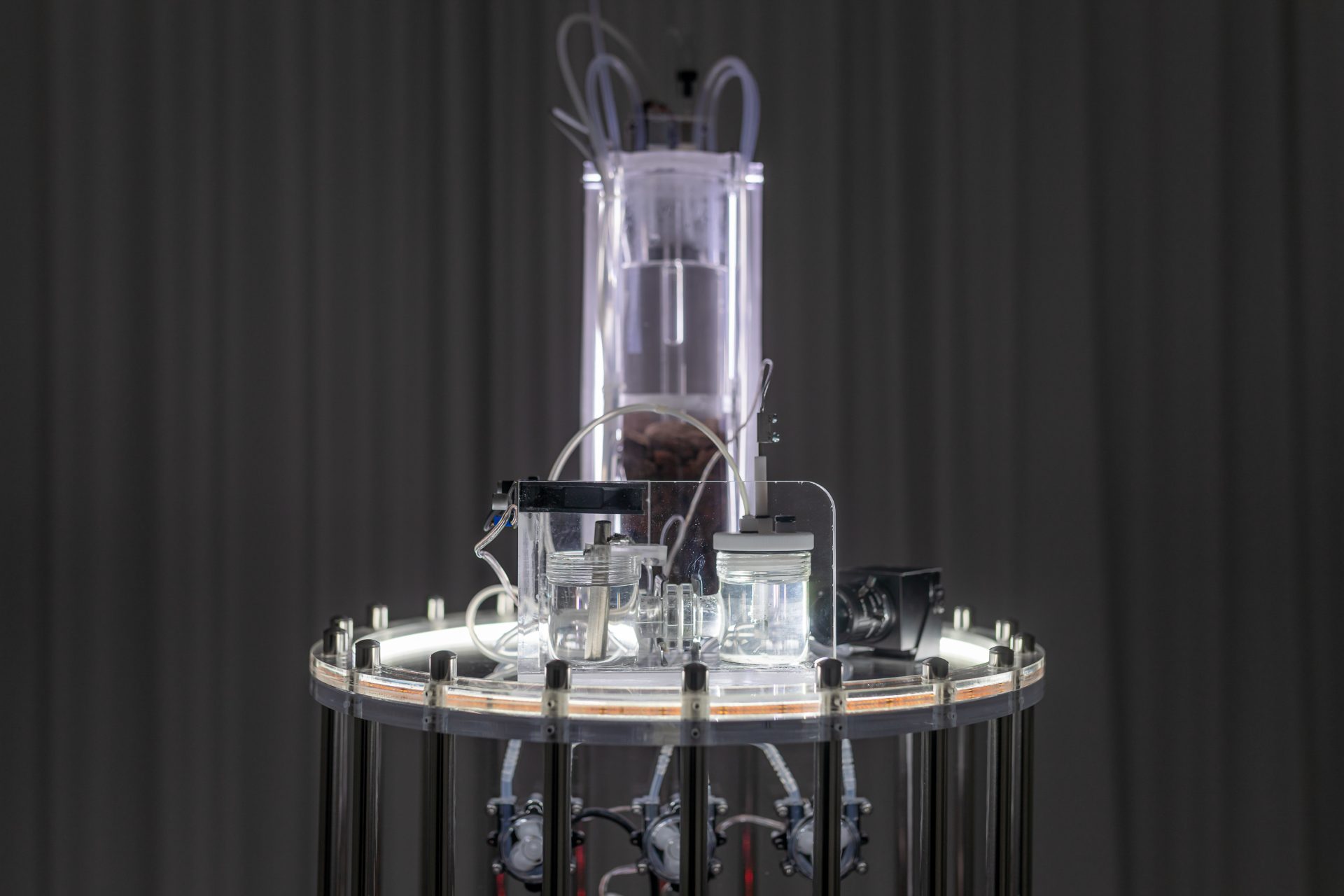
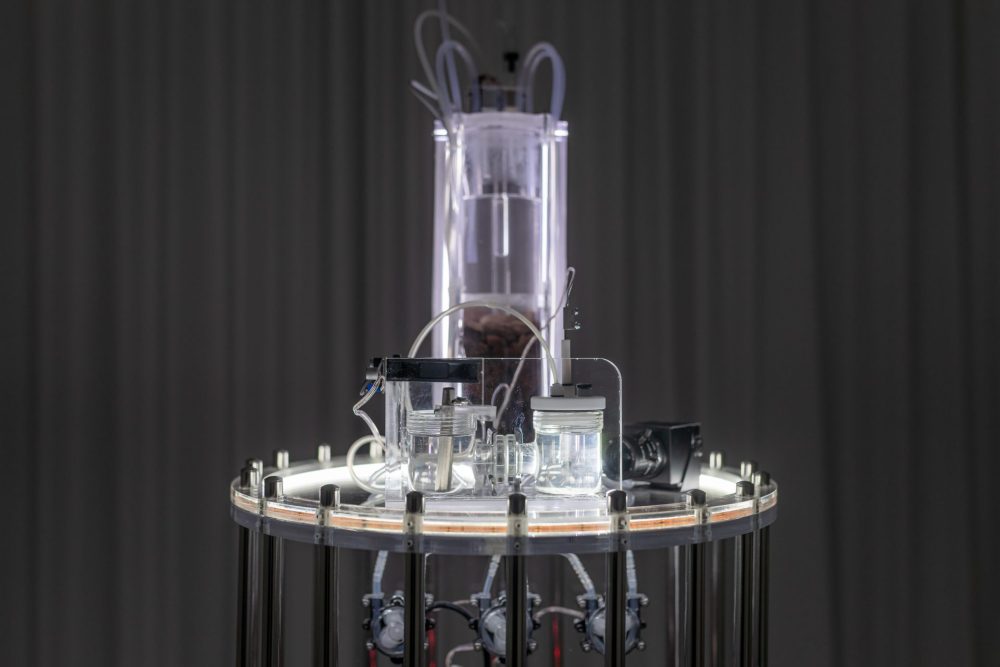
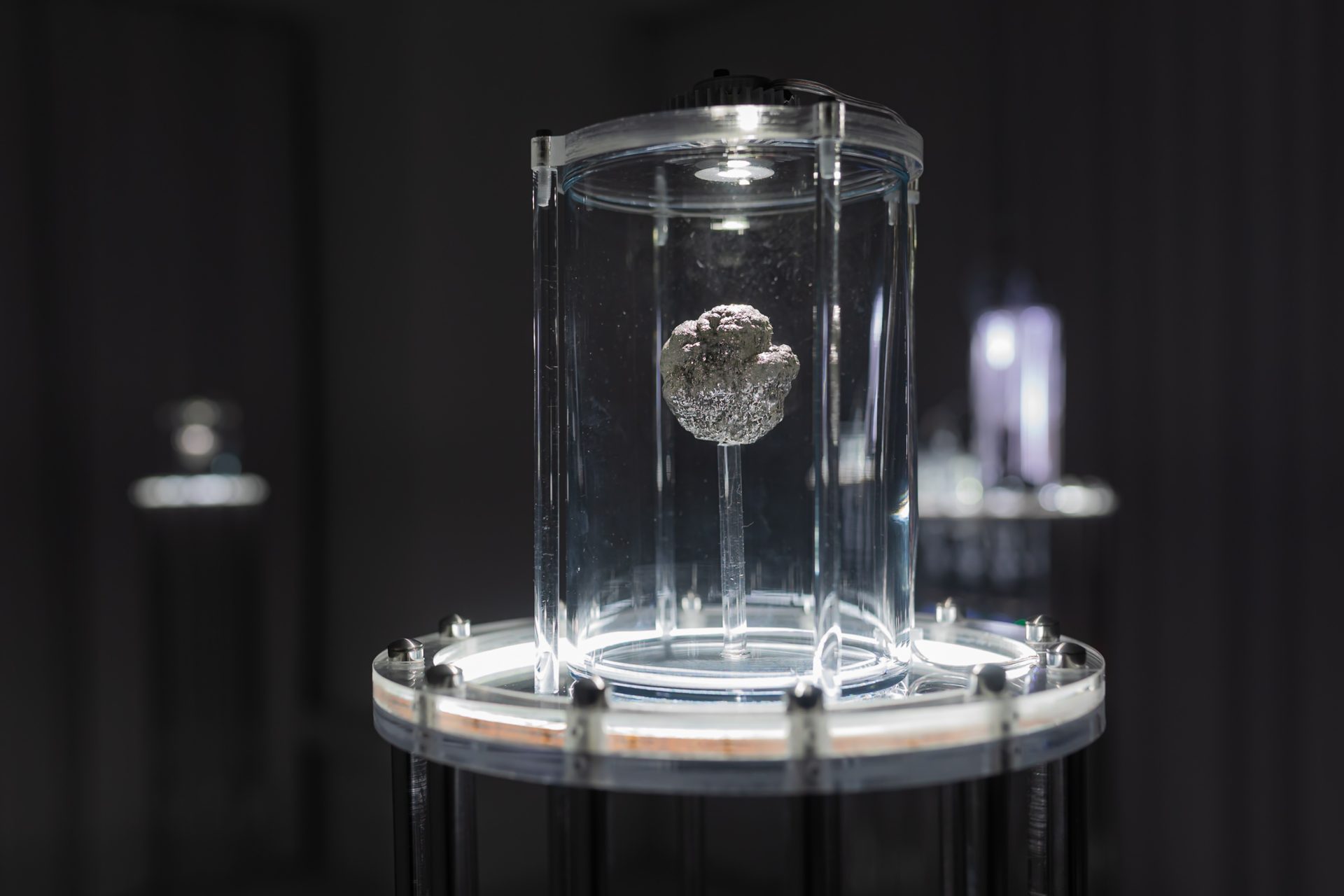
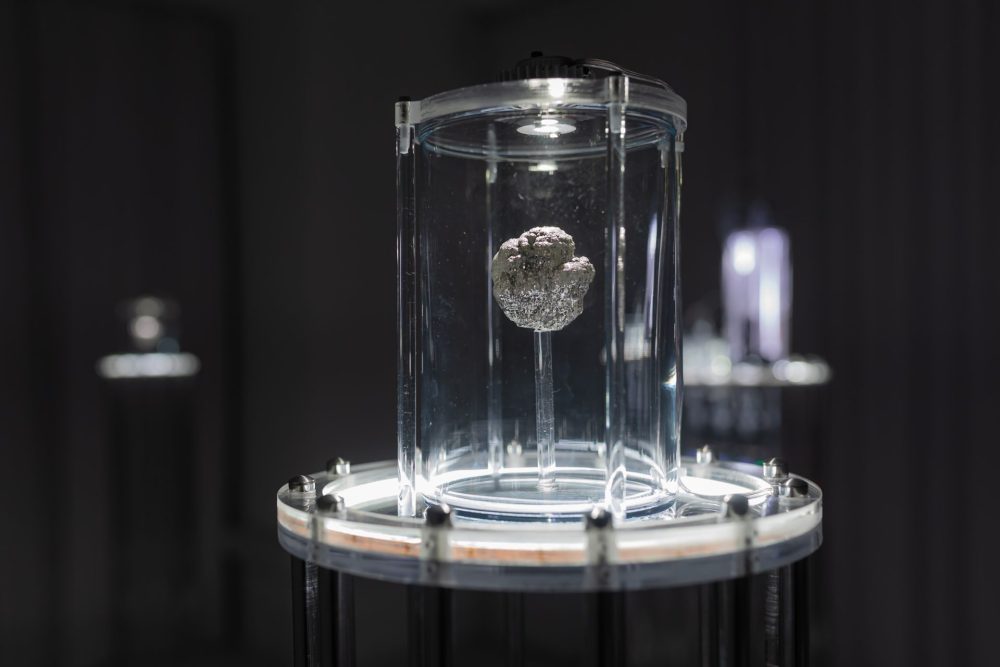
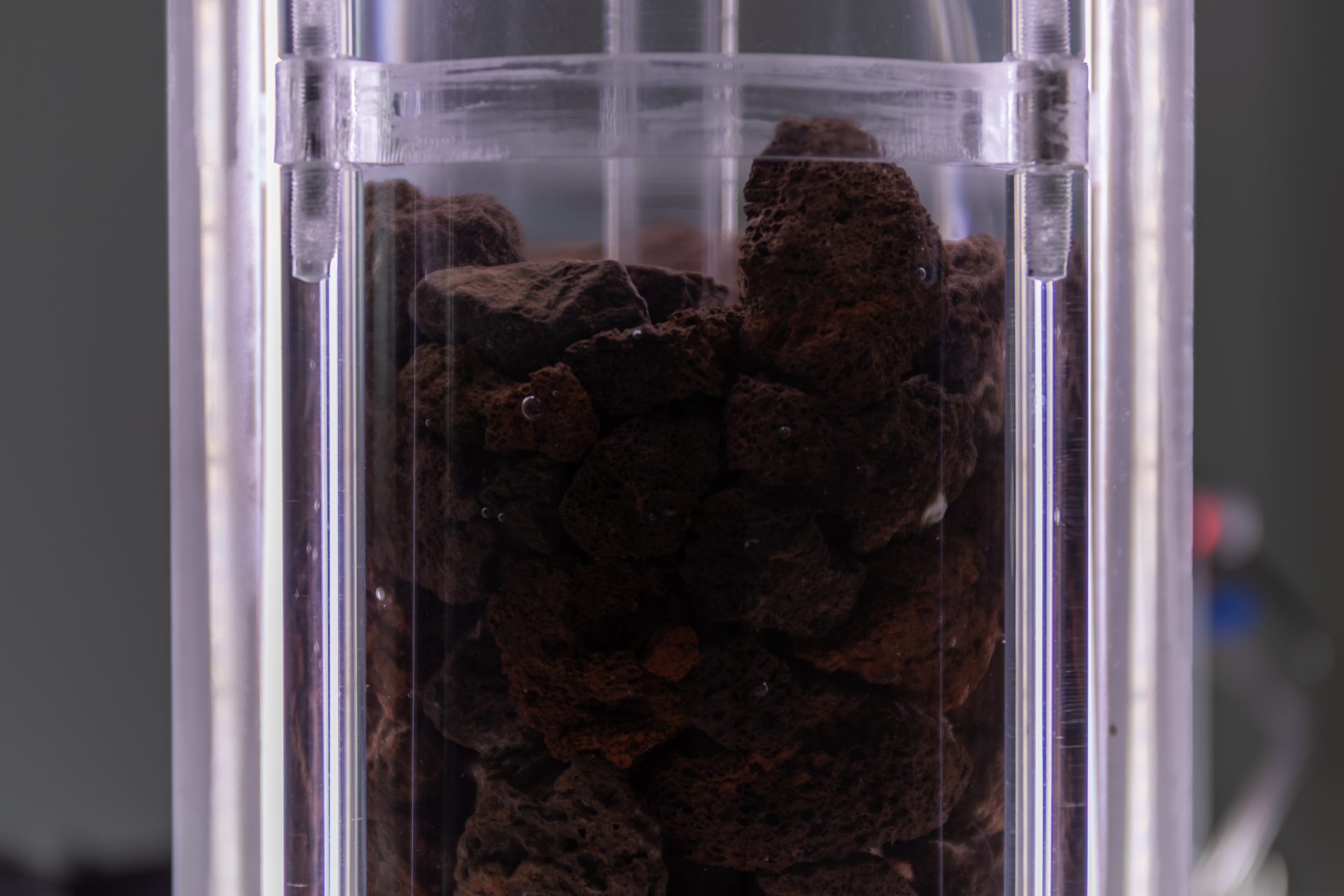
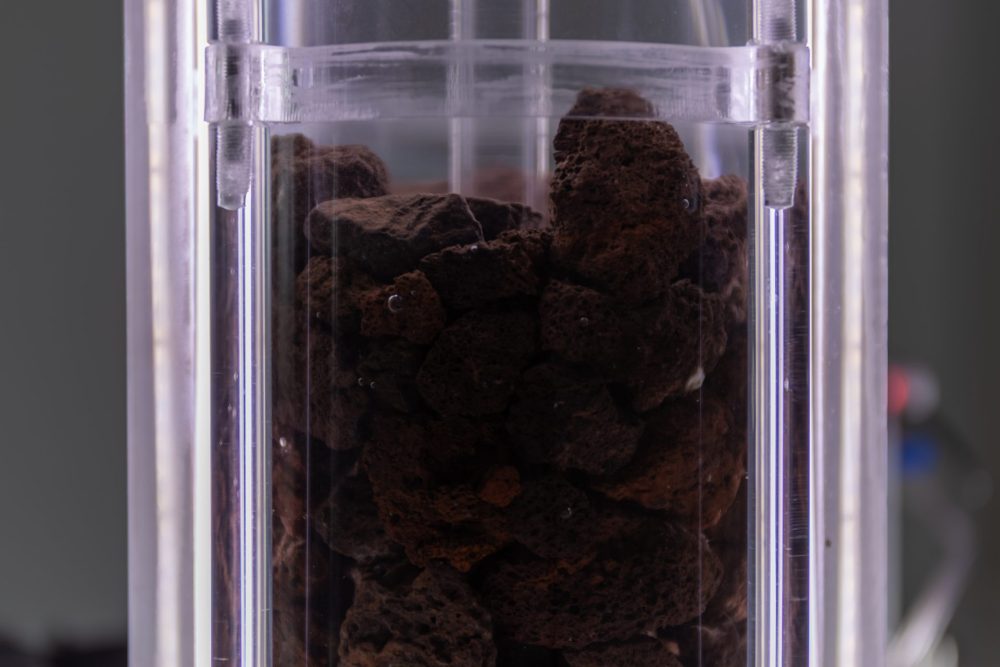
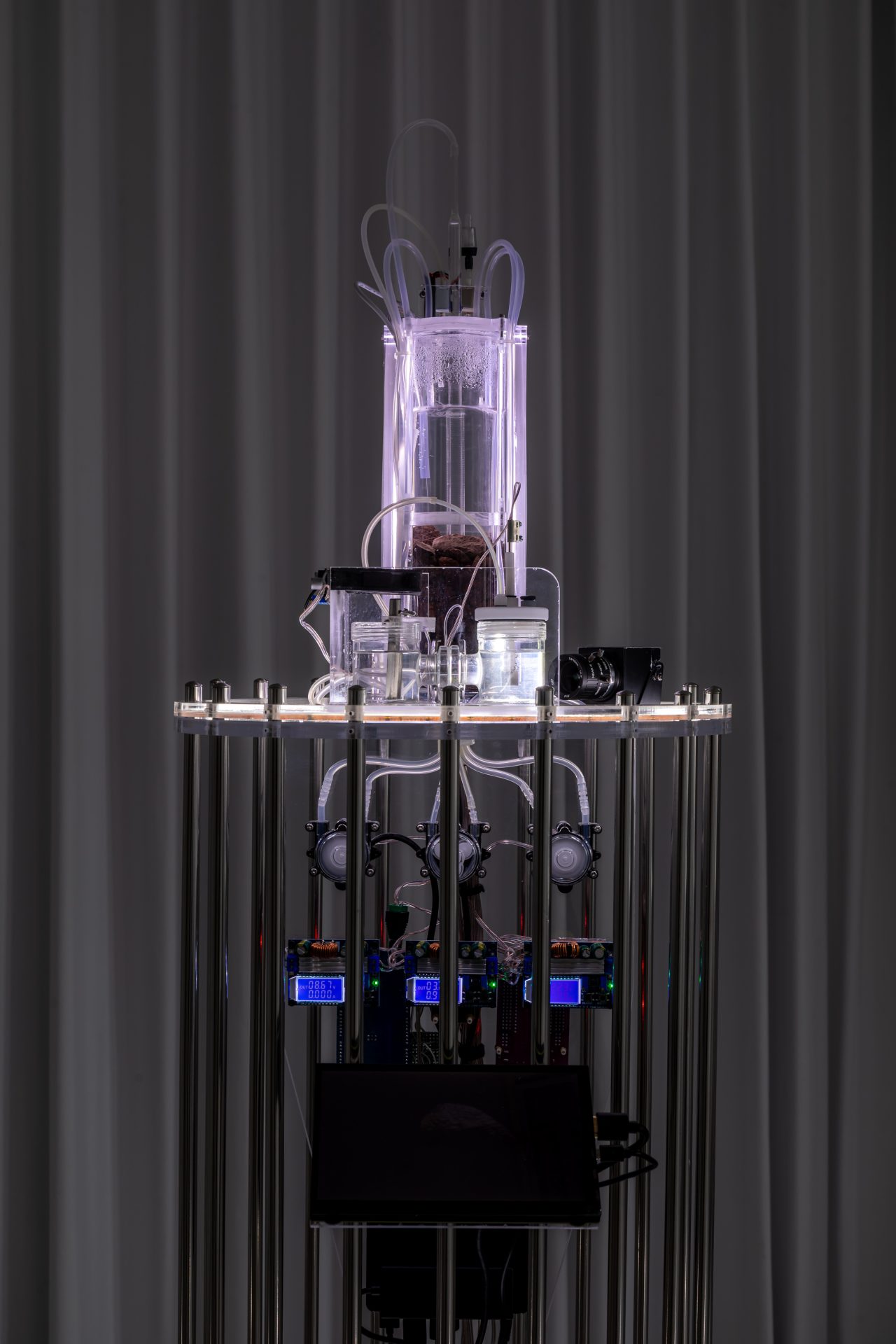
Upon entry, visitors first encounter two replicas of actual polymetallic nodules, precisely scanned by the Senckenberg Ocean Species Alliance and produced using a metal 3D printer at the Institute of Metals and Technology (IMT) in Ljubljana. These replicas are presented as geological artefacts of the future, symbolising planetary processes, our understanding of electrochemistry, and the exploitation of nature. At the core of the installation is a bioreactor module containing archaea, ancient microorganisms that require oxygen to survive. Their metabolic activity affects the voltage of the electrolytic cell: higher activity results in increased oxygen release at the platinum anode, while lower activity leads to a decline. A camera tracks the formation of microscopic oxygen bubbles, and the system translates visual data into sound and light signals.
In the contemporary world, polymetallic nodules are caught between two opposing logics. On one hand, they are a source of metals required for batteries and the infrastructure of the green transition. On the other hand, they are extremely sensitive geological entities that grow only a few millimetres over thousands of years and are embedded within microscopic ecosystems that we are only beginning to understand. From this dual perspective, the project engages with object-oriented ontology (OOO), which proposes that nodules are not merely raw materials but objects with their own reality, hidden properties, and capacities that cannot be reduced to their utility value. They exist independently of human perception and therefore require different ethical and ontological considerations.
The project encourages reflection on object-oriented ontology, which rejects the privileged position of the human and supports the idea that non-human actors, nodules, minerals, and bacteria alike possess their own reality that does not exist solely in relation to a human observer. The bacteria that trigger changes in sound and the nodules that carry the metals of the future are not simply materials or tools, but entities with their own logics and distinct temporal layers. This perspective allows the installation to be read as an assemblage of multiple modes of existence, in which technological, biological, and geological processes are no longer separate but actively intertwined. Organism-oriented ontology, a contemporary philosophical and biological perspective, further asserts that living organisms carry a specific ontological weight, regardless of how small or invisible they may be. Organisms are autonomous, world-forming agents that, through metabolism, self-regulation, and the interpretation of environmental signals, co-create the environments they inhabit.
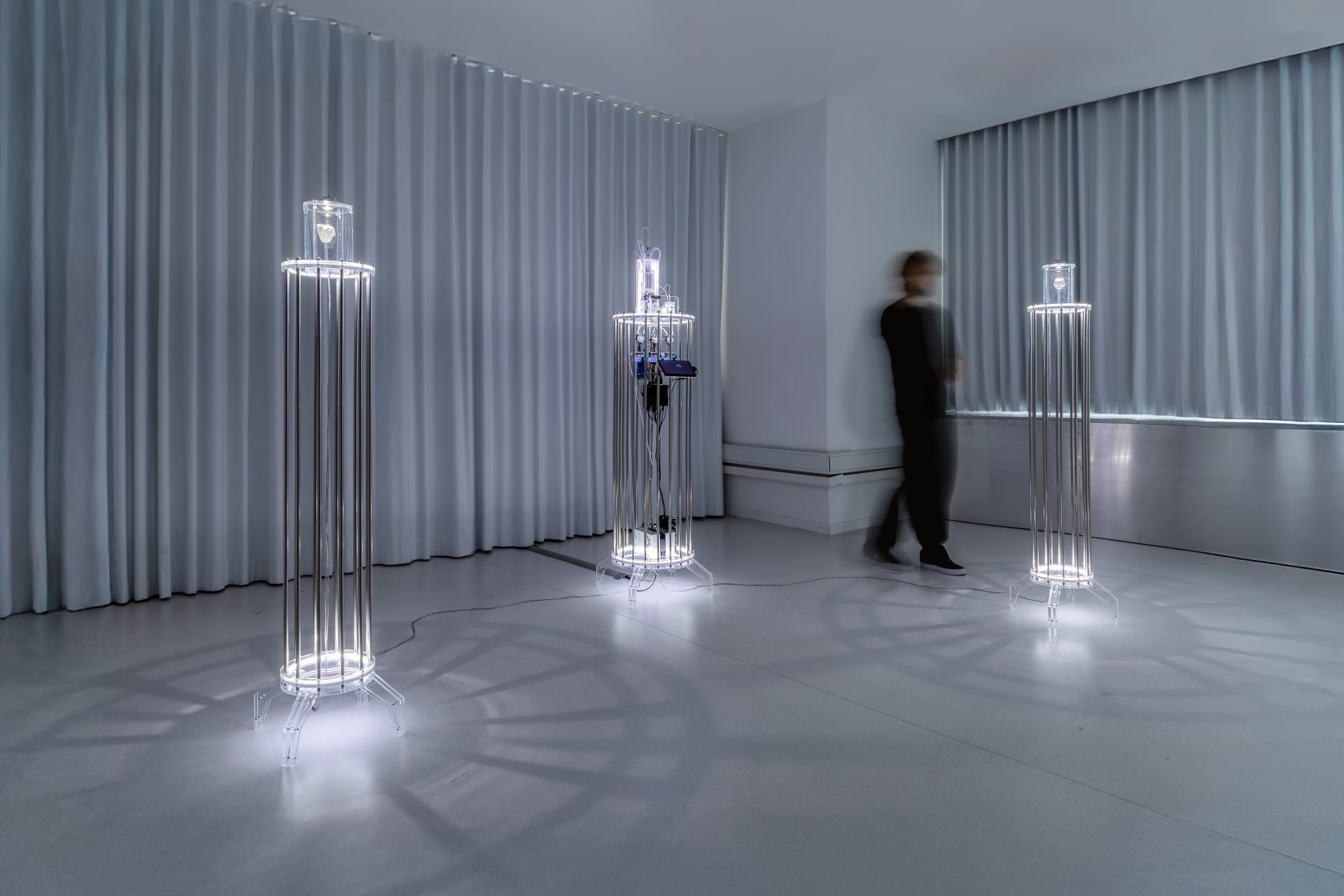
The Latin title Malum Prohibitum, meaning ‘the forbidden fruit,’ alludes to the narrative of original sin, a role assumed here by the polymetallic nodules themselves. Within the deep-sea ecosystem, they function as silent, hidden fruits that remained beyond human reach for millions of years. Once contemporary capitalism identifies them as a source of valuable strategic metals, they become symbolic objects of desire that carry an implicit warning. This raises the question of what it means to intervene in ecosystems that we are only beginning to comprehend. The depths of the oceans are not empty; they host biotic and abiotic dynamics capable of reshaping our understanding of life itself. If nature is valued solely in economic terms, its essential dimensions remain unseen. The installation, therefore, opens a space for discourse on the need to reshape our ethics and our way of understanding the world, not out of romantic notions of nature preservation, but from the recognition that the world is interwoven with life, metabolism, and relationships far more complex than those allowed for by prevailing economic models.
Author: Miha Godec
Curator: Maša Žekš
Year: 2025
Technical and Development Support: Institute of Metals and Technology (IMT), Kersnikova Institute
Photogrammetry and 3D Scans of Polymetallic Nodules: Senckenberg Ocean Species Alliance (Frankfurt, Germany),
Programming: Dimitry Morozov
Technology: computer, sensors, microcontrollers, pumps, laboratory glassware, metal, acrylic
Production: Artevida Institute
Co-production and Support: Institute of Metals and Technology (IMT), Atol Institute
Supported by: Municipality of Ljubljana
Special thanks: Dr. Irena Paulin (IMT), Nejc Velikajne (IMT), Prof. Dr. Nejc Hodnik (IMT)