Salis
Exhibited:
2024-25, solo exhibition, Kresija gallery, Ljubljana, Slovenia
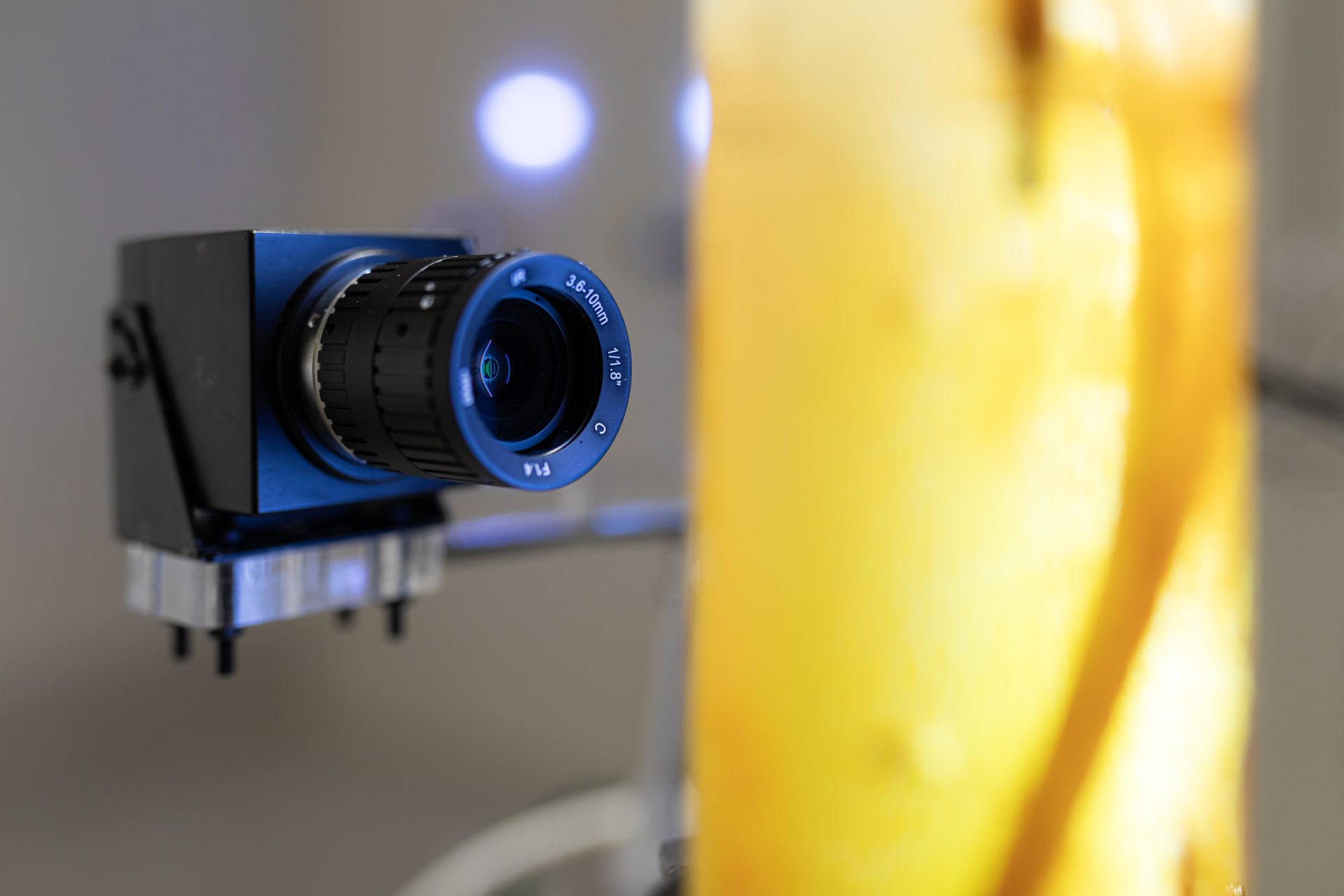
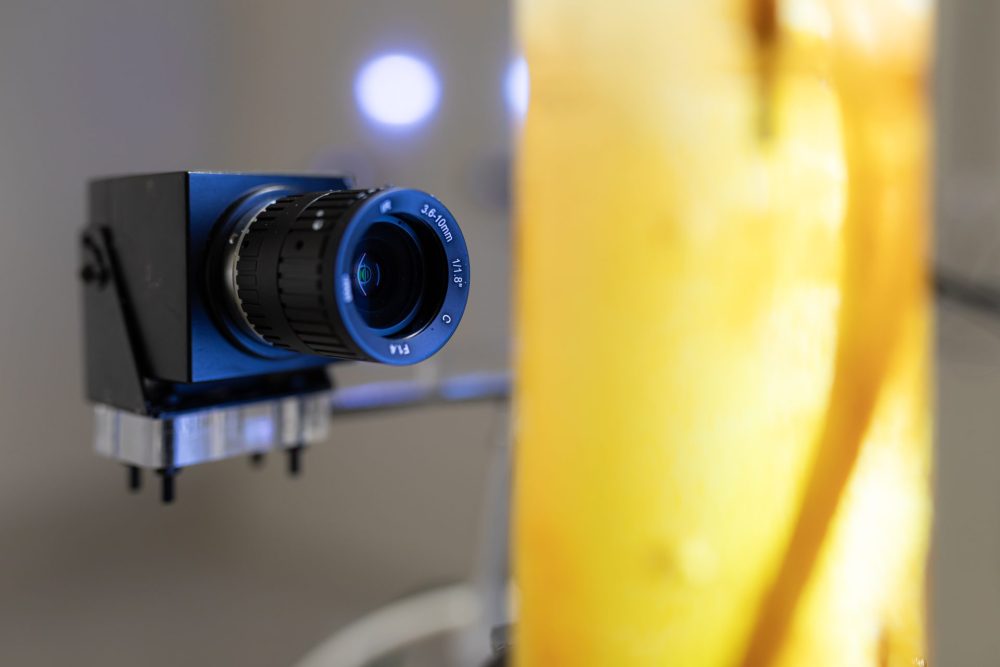
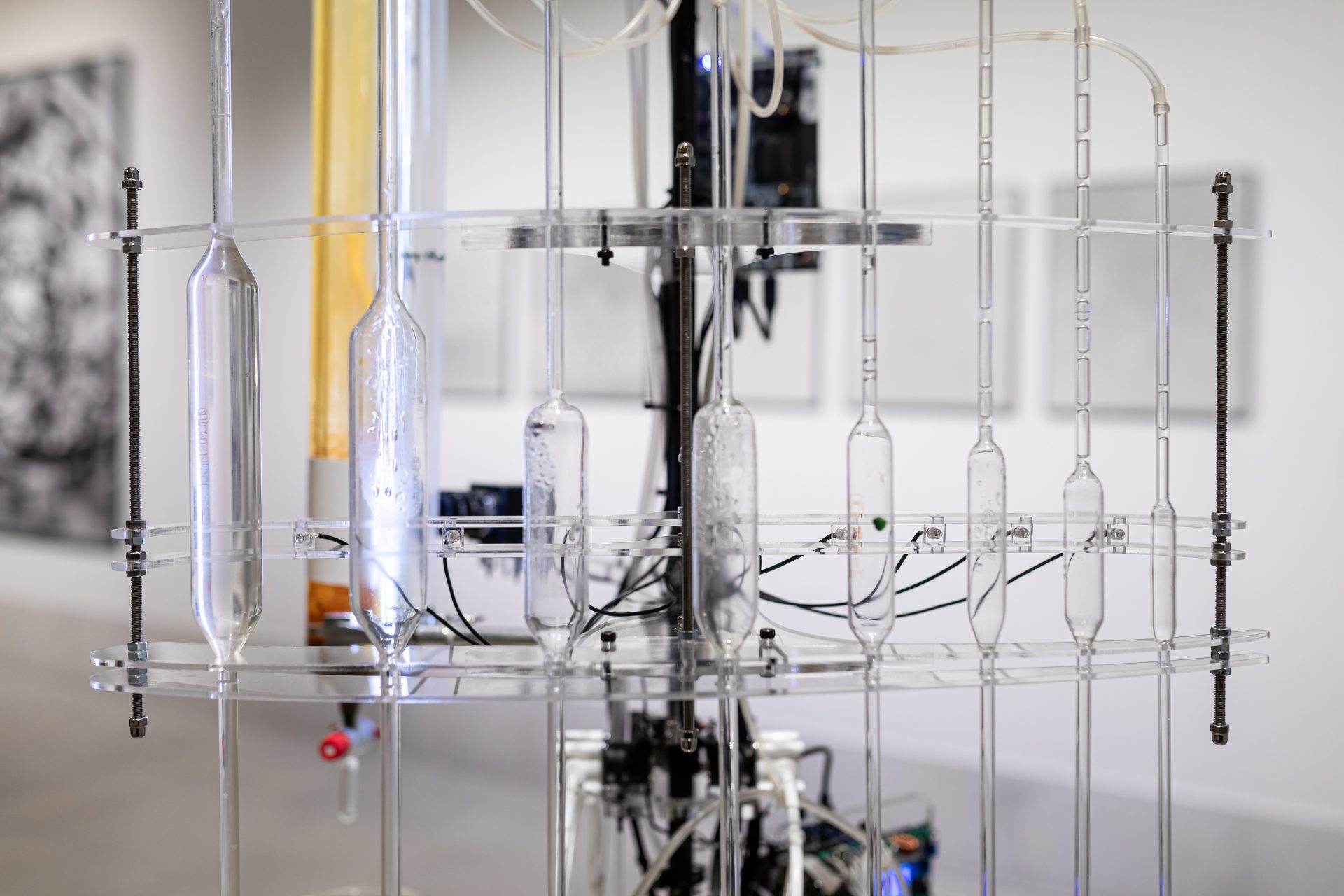
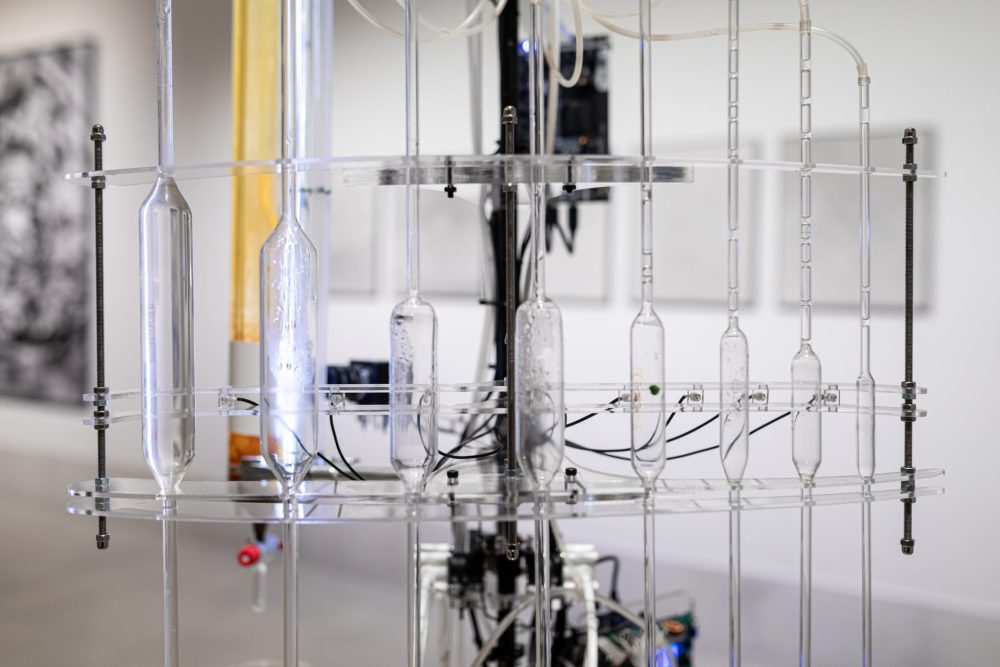
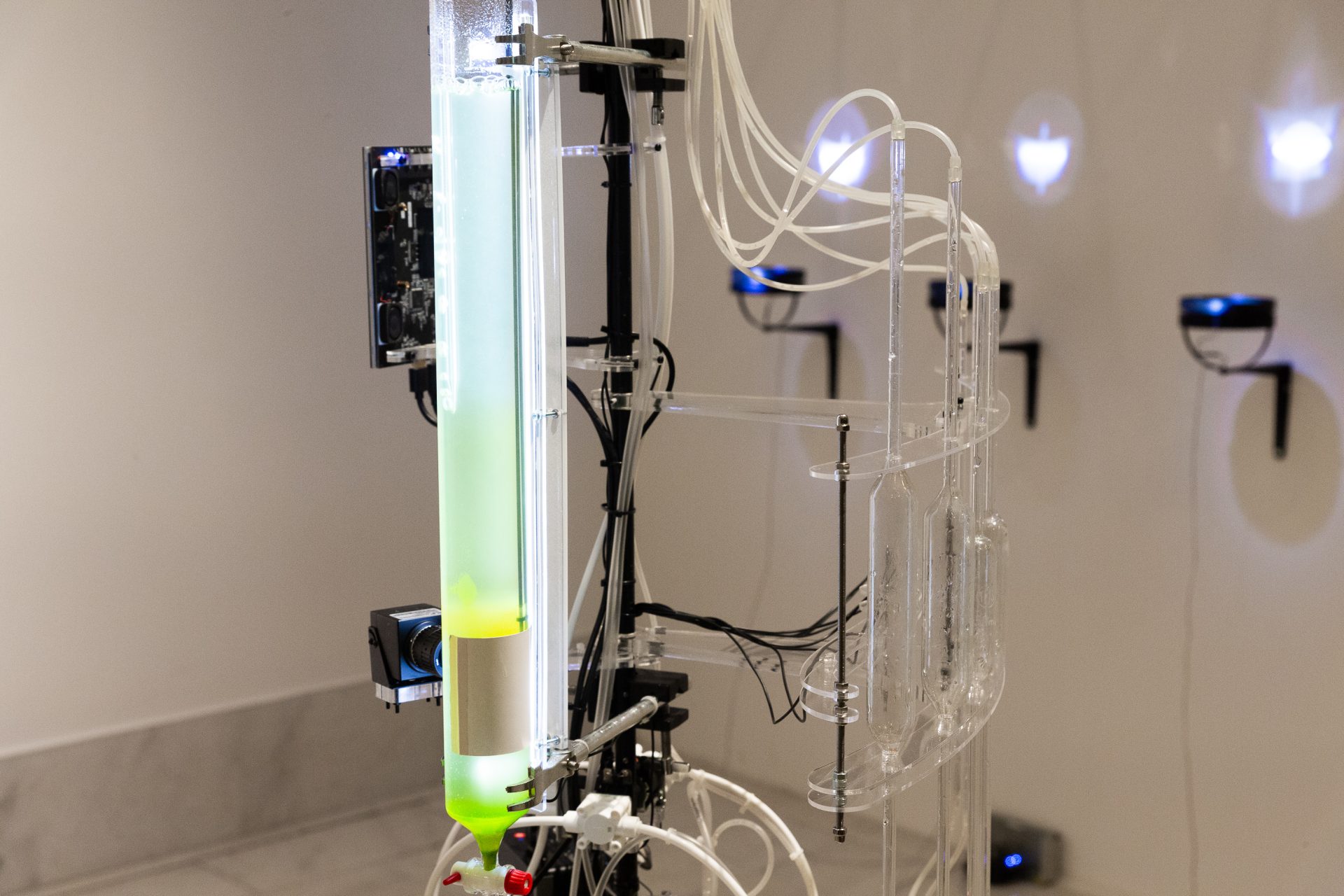
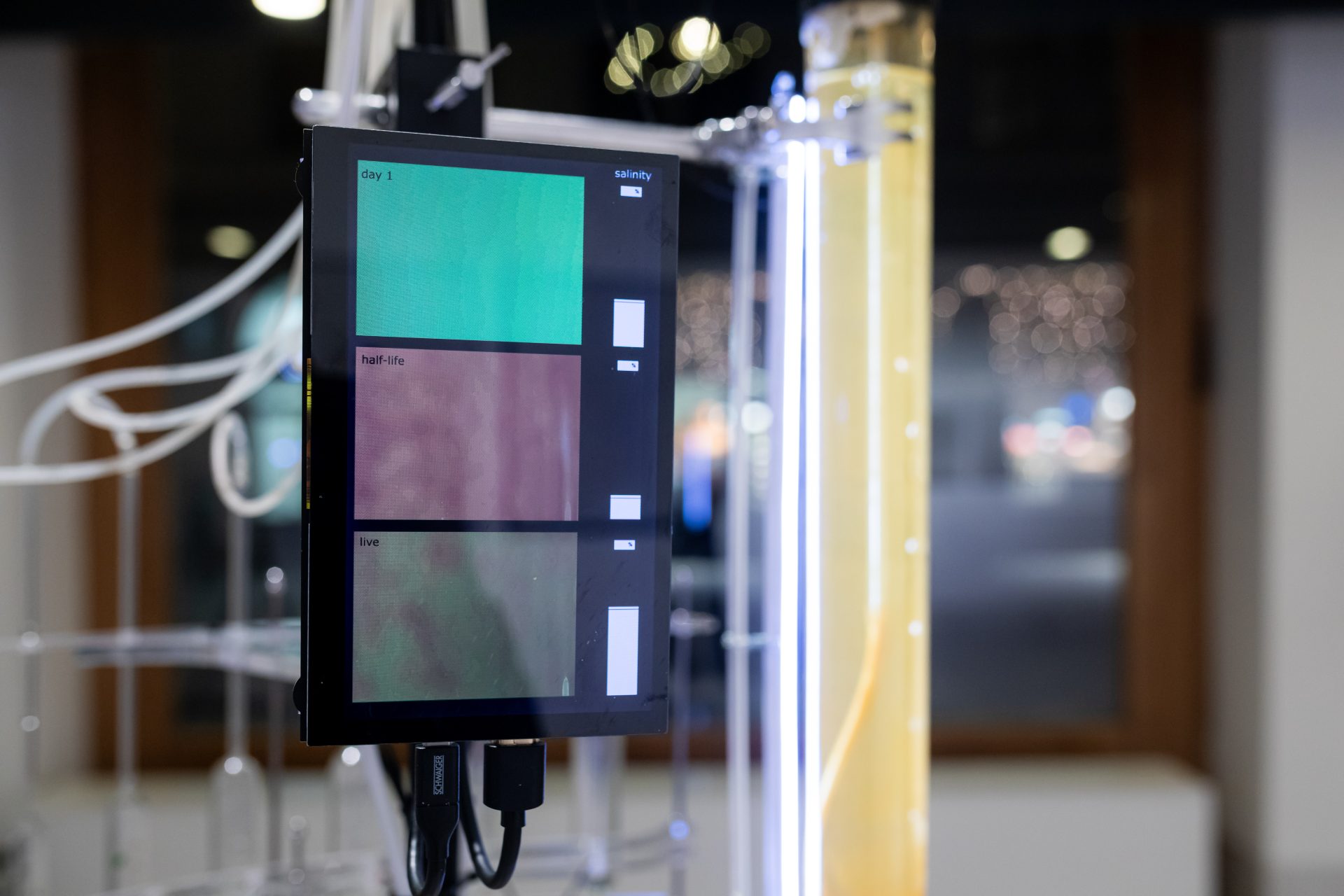
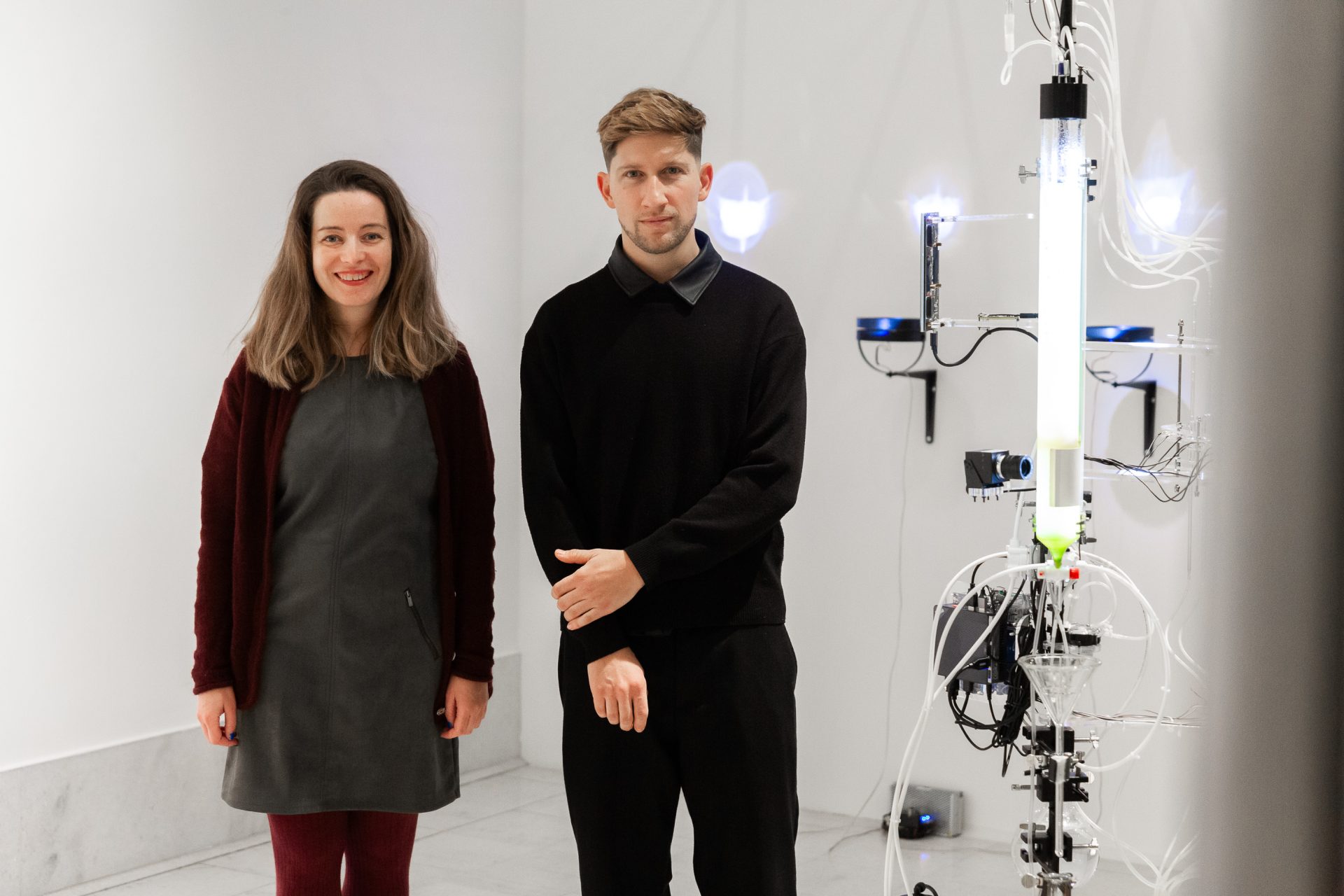
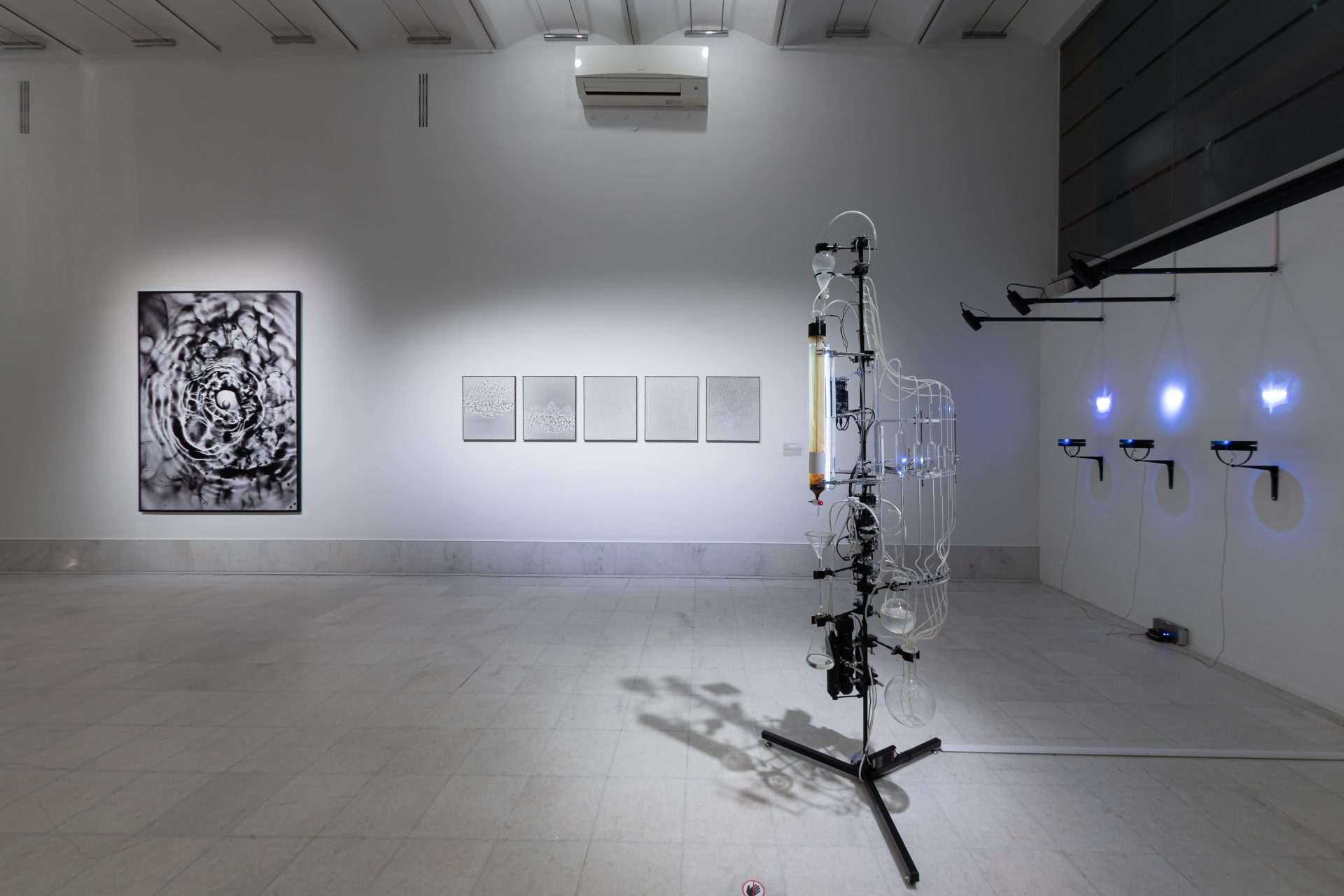
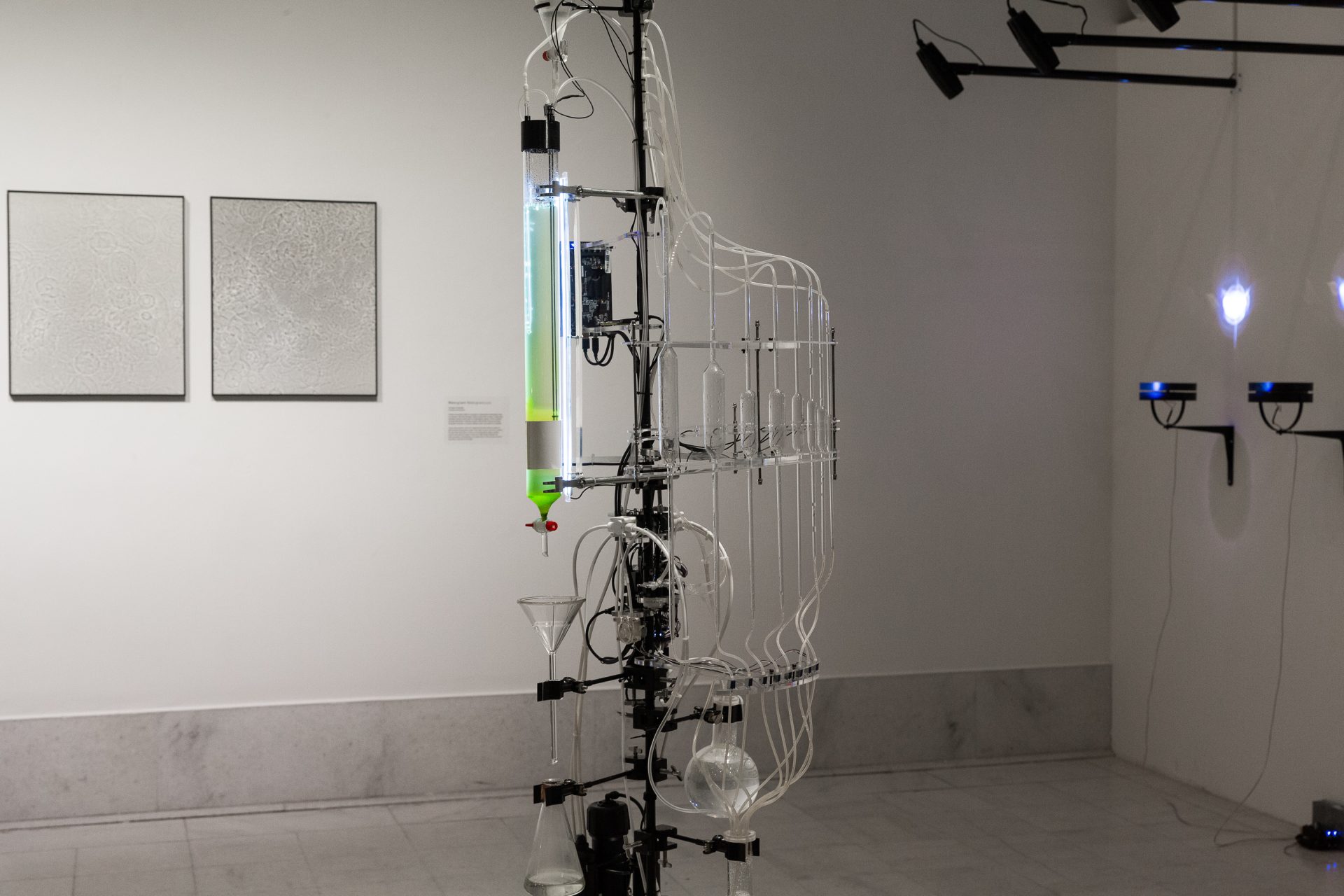
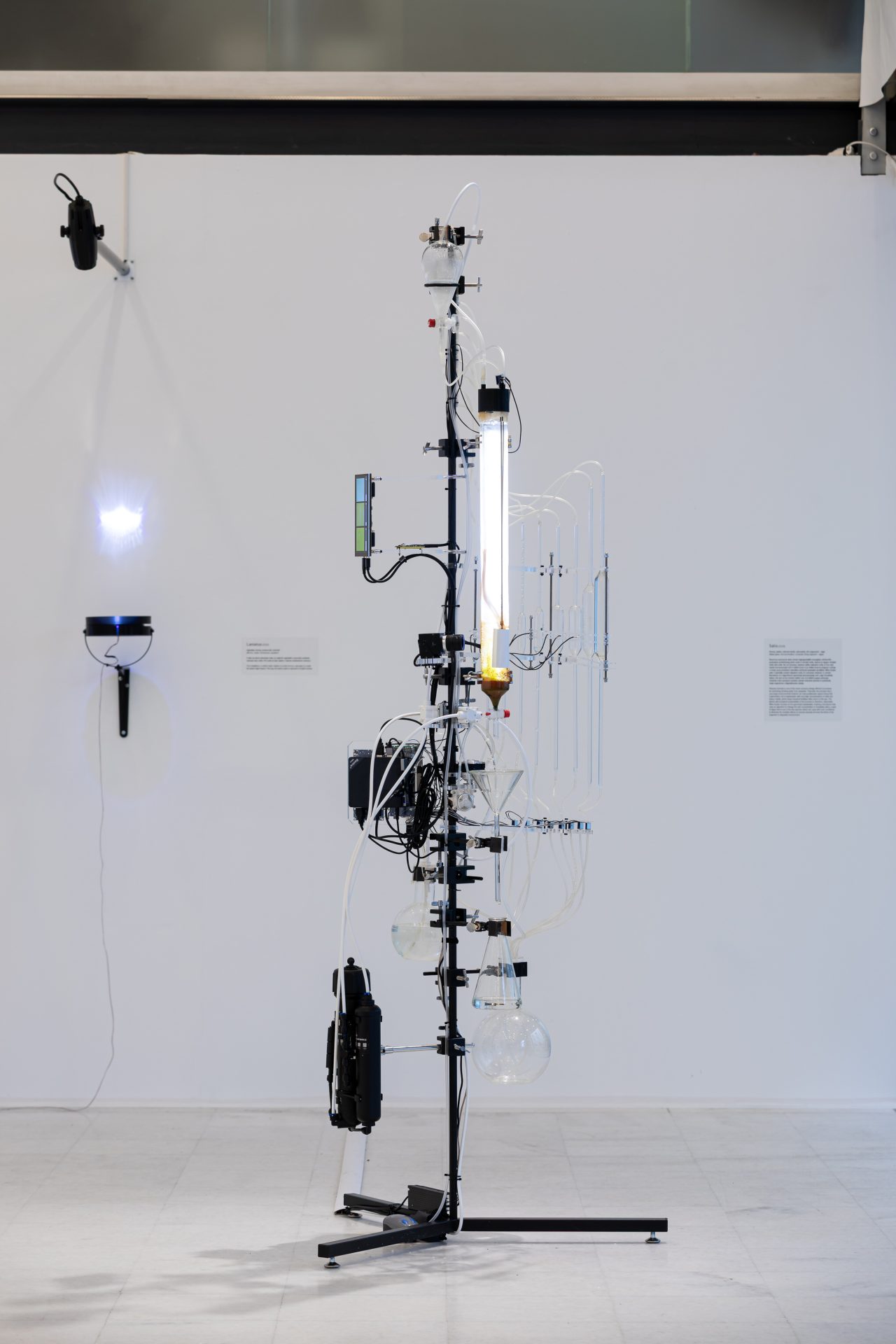
Reverse osmosis is one of the most widely used energy-efficient processes for extracting drinking water from seawater. The process also leaves a significant environmental trace, especially through the production of wastewater with high concentrations of salts and other residues, which industrial facilities often discharge back into the sea. Its ecological sustainability is therefore increasingly questioned. In Salis, Miha Godec focuses on this residual wastewater through a bioreactor in which the salt concentration surrounding Dunaliella salina is altered algorithmically over the course of the exhibition. This halophilic microalga can survive in highly saline environments and responds to stress through shifts in pigmentation, gradually moving between green, orange and reddish tones. A camera observes these chromatic changes, while an image-analysis system reads the colour values of the algae and feeds them back into the behaviour of the installation. The visual transformation is recorded over time and displayed on a monitor in the gallery, forming a slow archive of the organism’s changing condition.Dunaliella salina is also commercially cultivated in hypersaline environments as a natural source of beta carotene, a pigment also found in carrots and used as a precursor of vitamin A. In Salis, the organism appears as ecological indicator, industrial resource and living witness to the residues of water purification.
Year: 2024
Author: Miha Godec
Curator: Irena Borić
Technical Support and Production: Dmitry Morozov, David Drolc
Analogue Photographs: Peter Fettich (Kela)
Darkroom Assistant: Luka Karlin
Bio Consulting: Dr. Timotej Turk Dermastia
Technology, Technique: Sound installations, PureData, microcontrollers
Production: Artevida
Financial Support: City of Ljubljana